


Joining a local walking group for guided fell days
Why a led walk beats a solo gamble
There is a particular kind of confidence that comes from walking a hill with people who know it intimately. A led walk takes away the mental load: no squinting at a map in a car park, no guessing whether that faint track is a path or a drainage channel, no hoping the weather holds on an exposed ridge. You are handed a route, a pace and a leader who has covered that ground in every season. For anyone new to the fells, or simply new to a patch of countryside, it is the quickest way to a genuinely good day out.
It is also, quietly, one of the best safety nets in British hillwalking. Walking in a group of eight or ten means someone will notice if you slow down, twist an ankle or drop behind on a climb. That matters more than most people realise until the cloud comes down at 600 metres and the path vanishes into wet grass.
What a local group actually gives you
Groups vary enormously, but the good ones tend to offer the same handful of things. Look for these when you are weighing up whether a group is worth your time.
- Graded walks — usually labelled easy, moderate or strenuous, with distance, total ascent and an estimated finishing time. A six-mile walk with 500 metres of climbing is a very different beast from a flat six miles on a valley track.
- Local knowledge — which car park fills by half nine, which descent turns into a greasy slab after rain, where the peat hags will soak you to the knee in February, and which pub does the best chips afterwards.
- Skills passed on quietly — pacing yourself uphill, taking a bearing off a handrail feature, reading a sky that is filling in from the west, using a timing card without thinking about it.
- Company and car shares — lifts from a central meeting point often make the difference between a walk happening and not, especially for linear routes.
Where to find a group near you
Start local and start physical. Noticeboards still work: community halls, libraries, outdoor shops, post offices and church porches are where walking groups advertise their programmes. National park visitor centres usually keep a list of organised walks in the area, and many run their own guided days through the year.
Local walking festivals are an excellent taster. They pull together dozens of led walks over a week or a weekend, with grades from gentle valley rambles to full days on the tops. You can try three or four different leaders and styles before committing to anything. Word of mouth matters too — ask at the counter of an independent outdoor shop and you will usually get pointed towards the group that actually walks the hills rather than the one that meets for coffee.
How a typical fell day runs
Most groups meet between eight and nine in the morning, often at a car park or a village hall, and sort out lifts from there. The leader gives a briefing: the route, the expected time, where the escape points are, and any tricky ground. Expect a headcount at the start and a second one after lunch — a rough but effective way of making sure nobody is left behind.
Pace is usually conversational on the flat and steady uphill, with frequent regrouping. A backmarker or sweep stays at the rear, so slower walkers are never abandoned. Lunch is often taken at a summit or a sheltered spot out of the wind, and a good leader will move the group on if the cloud is thickening. Walking on the fells in the UK at two to three kilometres an hour with an ascent is normal — nobody is racing.
Skills you absorb almost by accident
This is the quiet benefit. After a season of led walks you will find yourself doing things automatically: turning your waterproofs into the wind before you stop, putting a spare layer on before you get cold rather than after, keeping a map to hand even on a route you know, and noticing how the ground underfoot changes from dry turf to slick rock. You will learn to time a day properly, allow for the fact that descending on wet grass is slower than you think, and respect how quickly weather moves in on open moorland.
Many groups also run occasional navigation or winter skills days for members, which is a cheap and friendly way to build towards walking independently — or towards bigger days, whether that means Lakeland fells, Welsh ridges, Scottish Munros or the hill ranges of the Pennines and Cheviots.
Getting the most from your first few walks
Be honest about your fitness when you book. If you have only walked flat miles recently, say so and pick an easy or moderate grade first. Turn up with more than you think you need: waterproof jacket and trousers, an insulated layer, gloves and hat, spare socks, a headtorch, water, and food. Boots with decent grip matter more than anything else in your kit.
Arrive early, introduce yourself, and let the leader know if you have any medical issues worth knowing about. Do not wander ahead of the group, and do not leave without telling the leader. Memberships are usually modest — often a small annual subscription with a couple of pounds for guests — and leaders are volunteers, not professional guides, so a thank-you goes a long way. Give it three walks before deciding. By then you will know the names, the pace, and whether the hills have got their hooks into you.


Hillwalking
-
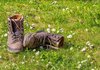
Compare leather and synthetic options, focusing on ankle support, sole grip and breathability for wet, rocky paths in Britain.

Navigation


-

Long established fact that a reader will be distracted
-

Long established fact that a reader will be distracted
-

Long established fact that a reader will be distracted



Gear Reviews
Karla Gleichauf
12 May 2017 at 05:28 pm
On the other hand, we denounce with righteous indignation and dislike men who are so beguiled and demoralized by the charms of pleasure of the moment
M Shyamalan
12 May 2017 at 05:28 pm
On the other hand, we denounce with righteous indignation and dislike men who are so beguiled and demoralized by the charms of pleasure of the moment
Liz Montano
12 May 2017 at 05:28 pm
On the other hand, we denounce with righteous indignation and dislike men who are so beguiled and demoralized by the charms of pleasure of the moment